
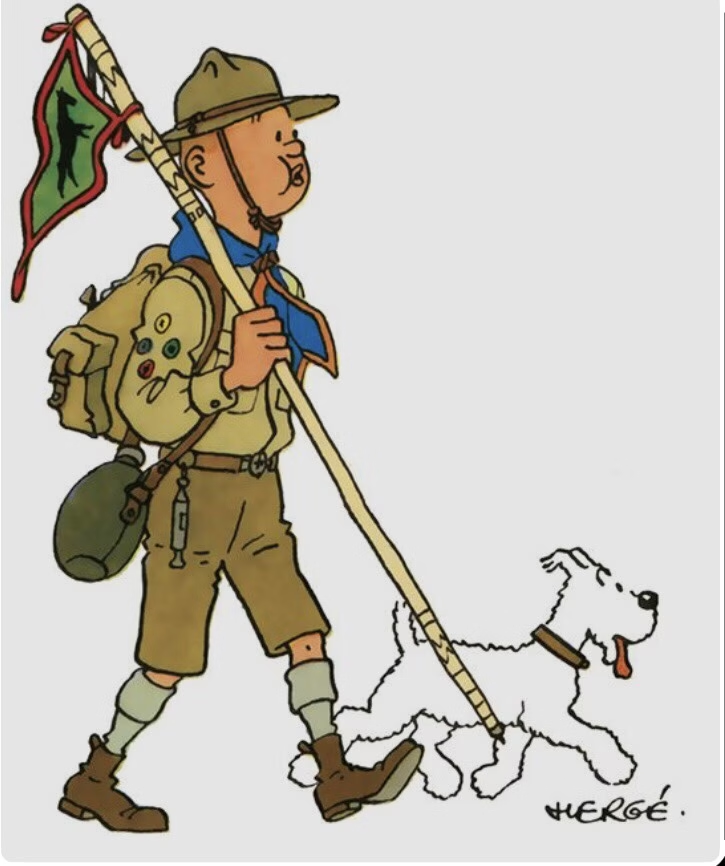
Exhibit Spotlight: The Adventures of Totor, Tintin, and a Scout called Hergé
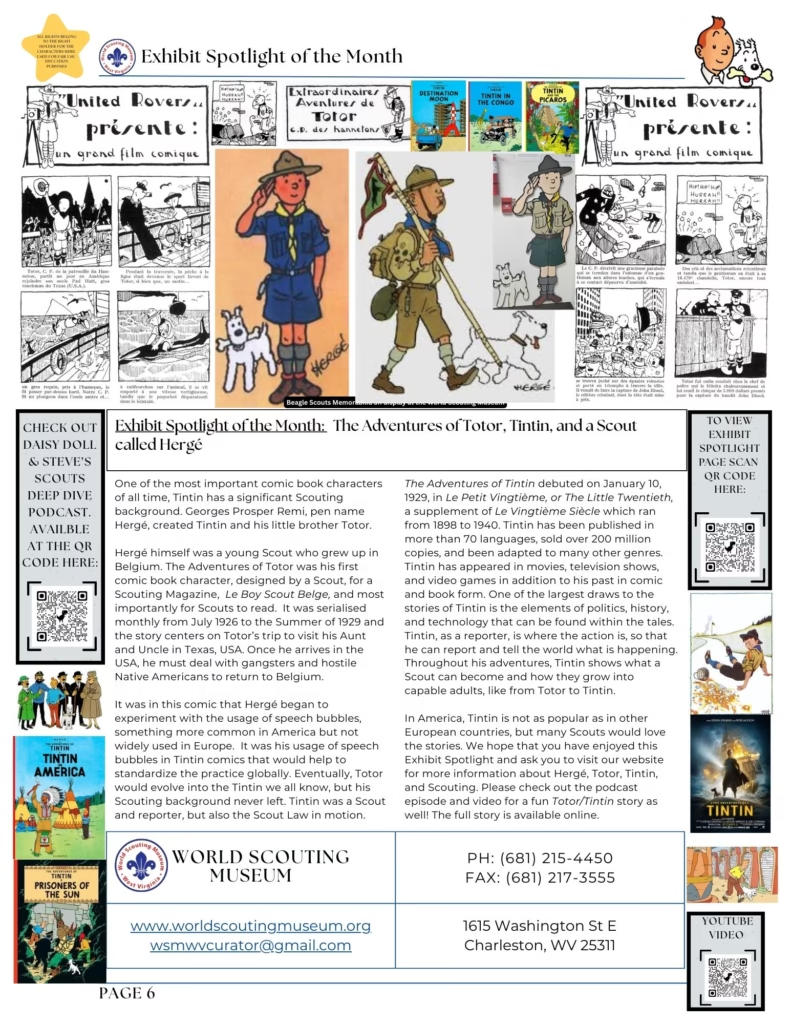
One of the most important comic book characters of all time, Tintin has a significant Scouting background. Georges Prosper Remi, pen name Hergé, created Tintin and his little brother Totor.
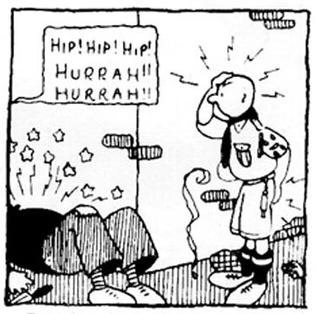
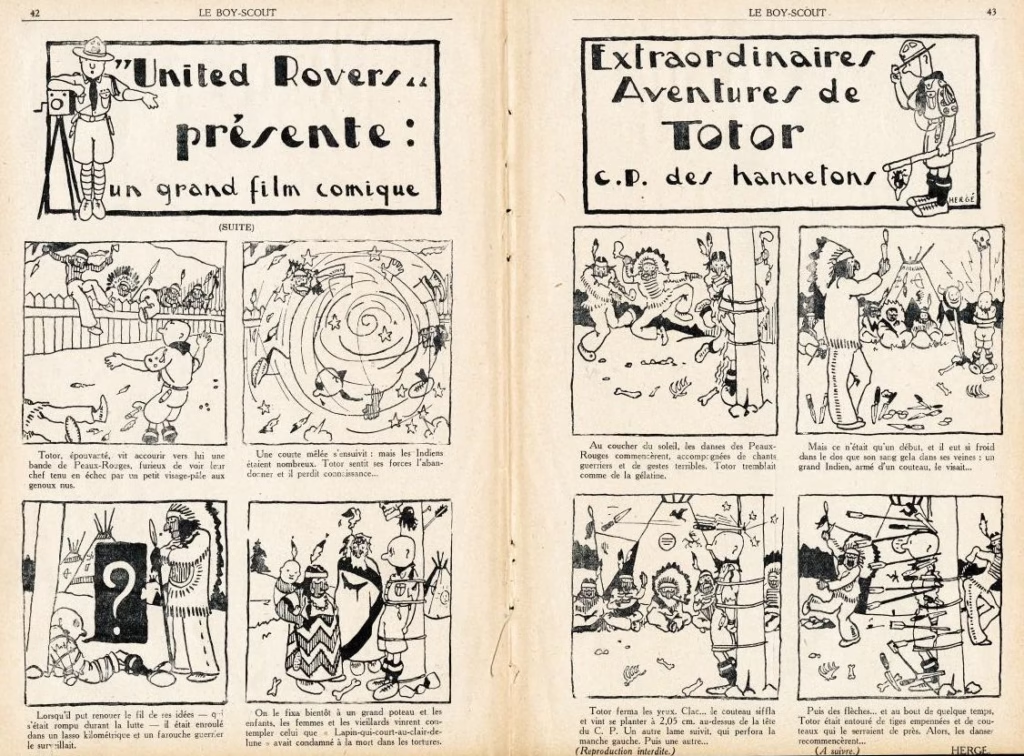
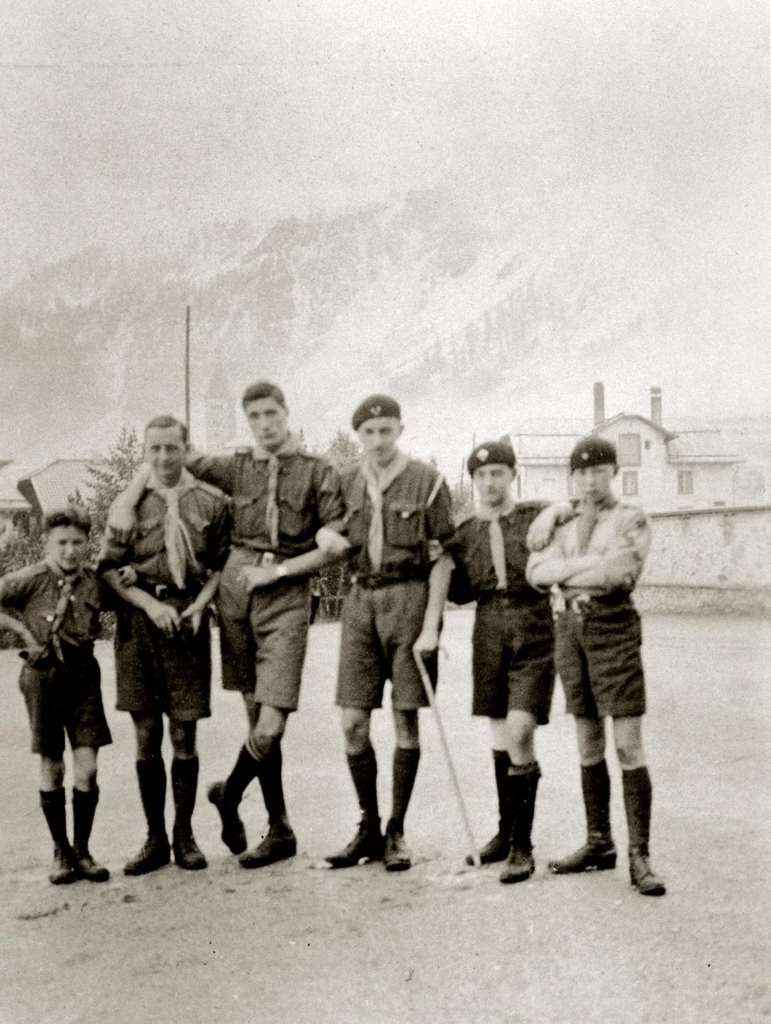
Hergé himself was a young Scout who grew up in Belgium. The Adventures of Totor was his first comic book character, designed by a Scout, for a Scouting Magazine, Le Boy Scout Belge, and most importantly for Scouts to read. It was serialised monthly from July 1926 to the Summer of 1929 and the story centers on Totor’s trip to visit his Aunt and Uncle in Texas, USA. Once he arrives in the USA, he must deal with gangsters and hostile Native Americans to return to Belgium.
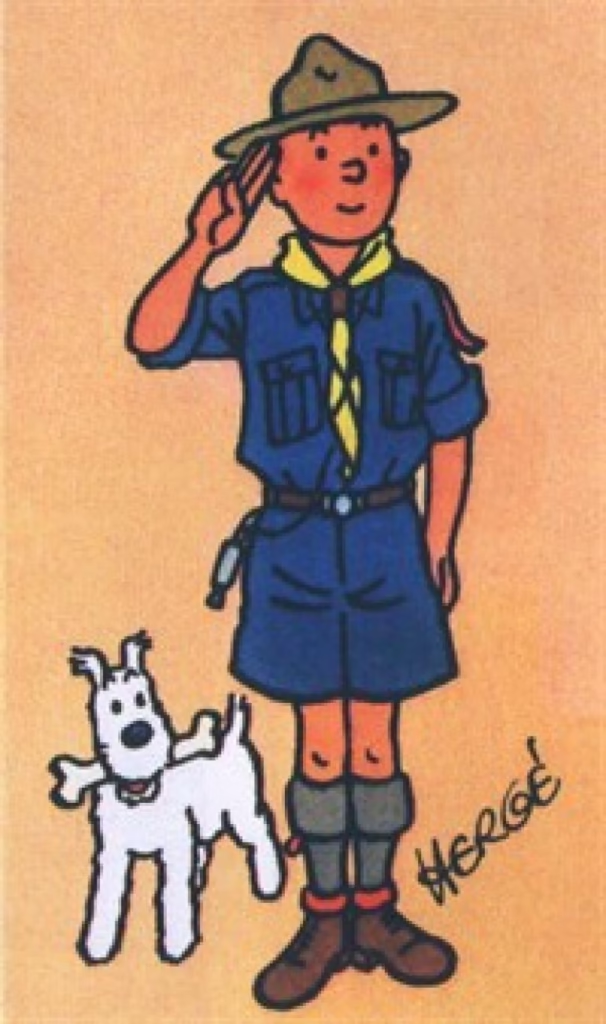
It was in this comic that Hergé began to experiment with the usage of speech bubbles, something more common in America but not widely used in Europe. It was his usage of speech bubbles in Tintin comics that would help to standardize the practice globally. Eventually, Totor would evolve into the Tintin we all know, but his Scouting background never left. Tintin was a Scout and reporter, but also the Scout Law in motion.
The Adventures of Tintin debuted on January 10, 1929, in Le Petit Vingtième, or The Little Twentieth, a supplement of Le Vingtième Siècle which ran from 1898 to 1940. Tintin has been published in more than 70 languages, sold over 200 million copies, and been adapted to many other genres. Tintin has appeared in movies, television shows, and video games in addition to his past in comic and book form. One of the largest draws to the stories of Tintin is the elements of politics, history, and technology that can be found within the tales. Tintin, as a reporter, is where the action is, so that he can report and tell the world what is happening. Throughout his adventures, Tintin shows what a Scout can become and how they grow into capable adults, like from Totor to Tintin.

In America, Tintin is not as popular as in other European countries, but many Scouts would love the stories. You can learn more about Tintin and his brother Totor below. Be sure to listen to our podcast episode and check out the YouTube video!
Who is Georges Prosper Remi, or Hergé?
From his Wikipedia article: https://en.wikipedia.org/wiki/Herg%C3%A9
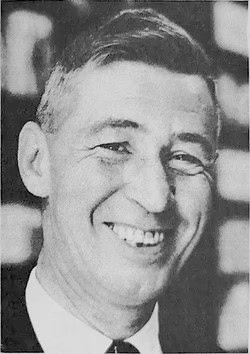
Born to a lower-middle-class family in Etterbeek, Brussels, Hergé began his career by contributing illustrations to Scouting magazines, developing his first comic series, The Adventures of Totor, for Le Boy-Scout Belge in 1926. Working for the conservative Catholic newspaper Le Vingtième Siècle, he created The Adventures of Tintin in 1929 on the advice of its editor Norbert Wallez. Revolving around the actions of boy reporter Tintin and his dog Snowy, the series’ early instalments – Tintin in the Land of the Soviets, Tintin in the Congo, and Tintin in America – were designed as conservative propaganda for children. Domestically successful, after serialisation the stories were published in book form, with Hergé continuing the series and also developing both the Quick & Flupke and Jo, Zette and Jocko series for Le Vingtième Siècle. Influenced by his friend Zhang Chongren, from 1934 Hergé placed far greater emphasis on conducting background research for his stories, resulting in increased realism from The Blue Lotus onward. Following the German occupation of Belgium in 1940, Le Vingtième Siècle was closed, but Hergé continued his series in Le Soir, a popular newspaper controlled by the Nazi administration.
After the Allied liberation of Belgium in 1944, Le Soir was shut down and its staff, including Hergé, were accused of having been collaborators. An official investigation was launched, and although no charges were brought against Hergé, in subsequent years he repeatedly faced accusations of having been a traitor and collaborator. With Raymond Leblanc, he established Tintin magazine in 1946, through which he serialised new Adventures of Tintin stories. As the magazine’s artistic director, he also oversaw the publication of other successful comics series, such as Edgar P. Jacobs’ Blake and Mortimer. In 1950, he established Studios Hergé as a team to aid him in his ongoing projects; prominent staff members Jacques Martin and Bob de Moor greatly contributed to subsequent volumes of The Adventures of Tintin. Amid personal turmoil following the collapse of his first marriage, he produced Tintin in Tibet, his personal favourite of his works. In later years, he became less prolific and unsuccessfully attempted to establish himself as an abstract artist.
Hergé’s works have been widely acclaimed for their clarity of draughtsmanship and meticulous, well-researched plots. They have been the source of a wide range of adaptations in theatre, radio, television, cinema, and computer gaming. He remains a strong influence on the comic book medium, particularly in Europe.[2][3] He is widely celebrated in Belgium: a Hergé Museum was established in Louvain-la-Neuve in 2009.


Tintin Scouting Games
Check out these Scouting Games based on Tintin from Tintin.com.
Here is the link: https://www.tintin.com/en/news/5608/herge-tribute-to-scouting#:~:text=A%20day%20on%20the%20theme,famous%20for%20his%20bad%20language.
Check out these Totor Comic Strips
Below are untranslated copies of the Comic Strips that were published in Le Boy Scout Belge from July 1926 to July 1929. These are here for research purposes and to show/share them with Scouts. If you own these strips and would like them removed, please reach out to the World Scouting Museum at wsmwvcurator@gmail.com
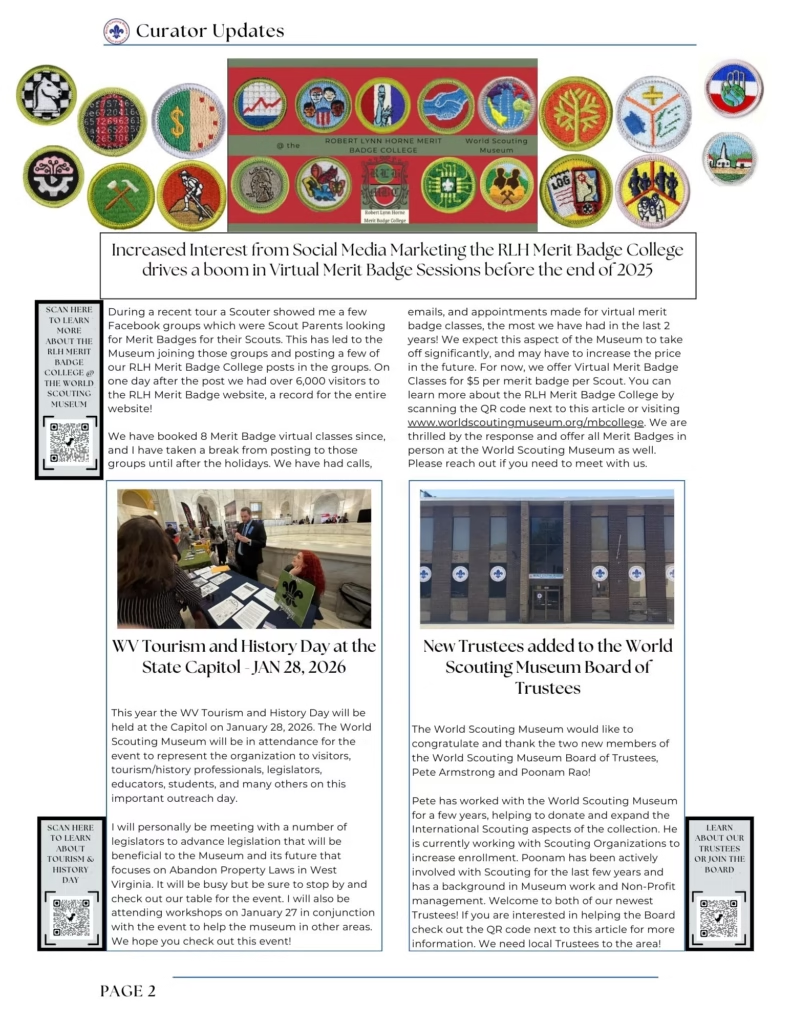
Check out the Newsletter where this Exhibit was Spotlighted!


Check out the Daisy Doll and Steve Scout Podcast on Totor and Tin Tin!
Check out this YouTube video explaining Totor and Tintin
Sources used for this Webpage, Podcast, and Newsletter
- https://en.wikipedia.org/wiki/The_Adventures_of_Totor
- https://en.wikipedia.org/wiki/Scouting_and_Guiding_in_Belgium
- https://en.wikipedia.org/wiki/Herg%C3%A9
- https://www.tintin.com/en/herge#
- https://en.wikipedia.org/wiki/The_Adventures_of_Tintin\
- https://museeherge.be/
- https://museeherge.be/presentation/la-vie-dherge/
- https://www.tintin.com/en/videos
- https://tintin.fandom.com/wiki/Totor
- https://www.reddit.com/r/TheAdventuresofTintin/comments/jvuvcv/the_adventures_of_totor/
- https://imgur.com/a/totor-by-herge-pp3-5-fMoFNqi
- https://bellier.co/totor%201926/vue1.htm
- https://www.reddit.com/r/TheAdventuresofTintin/comments/n7knk1/the_adventures_of_totor_pdf_en/
- https://bellier.co/totor%201926/vue2.htm – https://bellier.co/totor%201926/vue26.htm
- https://www.reddit.com/r/publicdomain/comments/1hw7cl2/totor_the_other_comic_of_herge_that_was_before/
- https://www.reddit.com/r/TheAdventuresofTintin/comments/ryu9mp/continuation_of_the_totor_story_any_leads/
- https://tabletopscoutingwidegames.wordpress.com/2022/02/19/tintin-totor-and-the-belgian-boy-scout-cartoonist-herge/
- https://pdsh.fandom.com/wiki/Totor
- https://www.tintin.com/en/herge
